
Strata EV Charging: The Complete Guide for Owners Corporations (2026)

Updated 10 June 2026
In brief: EV charging in Australian strata buildings works best with a managed Level 1 (15A) system combined with Dynamic Load Management. The owners corporation pays for shared infrastructure as a one-off contribution; each EV owner pays for their own connection and the electricity they use, metered individually. In NSW, EV charging is classified as sustainability infrastructure under section 132B of the Strata Schemes Management Act 2015, requiring a simple majority vote.
EV adoption is accelerating across Australia. As more residents drive electric, the question for strata committees is no longer whether to address EV charging in apartment buildings. It is how to do it fairly, affordably, and without creating a management burden. The Australian Government's energy.gov.au strata charging guides now treat EV-ready buildings as a mainstream expectation, not a future one.
This guide covers everything an owners corporation needs to know in 2026: how strata EV charging actually works, why Level 1 (15A) charging is the right answer for apartment buildings, who pays for what, how Dynamic Load Management protects the building's electrical system, and what successful rollouts in NSW look like in practice.
Whether you are responding to a resident's first formal request or proactively preparing your building for an EV future, this is the complete reference.
Why is EV charging in a strata building fundamentally different from a house?
When a homeowner installs EV charging, they call an electrician, install a charge point in their garage, and the job is done. The electrical connection is theirs. The car space is theirs. The decision is theirs alone.
In a strata building, almost none of that applies. The electrical mains connection is shared infrastructure. The car park is typically common property. Cabling routes run through common walls and ceiling spaces. Any modification to shared infrastructure requires owners corporation approval at a general meeting.
This shared nature creates three challenges that homeowners never have to solve:
- Shared electrical capacity. Every new charge point adds load to the building's electrical supply. In older buildings especially, the mains may have limited headroom. If unmanaged, multiple residents charging simultaneously can trip circuit breakers or overload the mains.
- Cost fairness. Non-EV owners should not subsidise EV owners. A well-designed strata EV solution draws a clear line between shared infrastructure costs and individual EV owner costs.
- Scalability. A building might have two residents with EVs today and forty in five years. The infrastructure needs to accommodate future demand without requiring repeated committee votes and OC expenditure every time a new resident wants to charge.
A solution that addresses all three of these challenges will win committee approval. One that does not tends to fail at the vote, or get approved and then cause problems down the track. For more on the approval process, see our guide to how to get EV charging approved in your strata building.
What are the three approaches to EV charging in strata buildings?
The Electric Vehicle Council's 2025 strata guidance identifies three structured approaches that strata committees and owners typically adopt. Each suits different building types and resident profiles. They sit within the framework of Australia's National Electric Vehicle Strategy, which sets the federal direction for EV-ready buildings.
| Approach | Best for | OC cost burden | Scalability |
|---|---|---|---|
| Individual lot connections | Townhouses or modern apartments with car spaces near each unit's meter | Low (resident pays own electrician) | Limited — each resident solves their own problem |
| Shared common chargers | Buildings with low initial EV uptake, visitor bays available | Moderate (1-2 high-speed chargers in common property) | Limited — congestion grows as EV uptake rises |
| Whole-building EV ready network | Most strata buildings expecting EV uptake to grow over time | Low per lot, scales with demand | Excellent — modular, designed for 100% coverage from day one |
The third approach has emerged as the leading model in Australian strata for one practical reason: it lets a building start small and grow with demand, without ever needing another major committee vote or capital works spend.
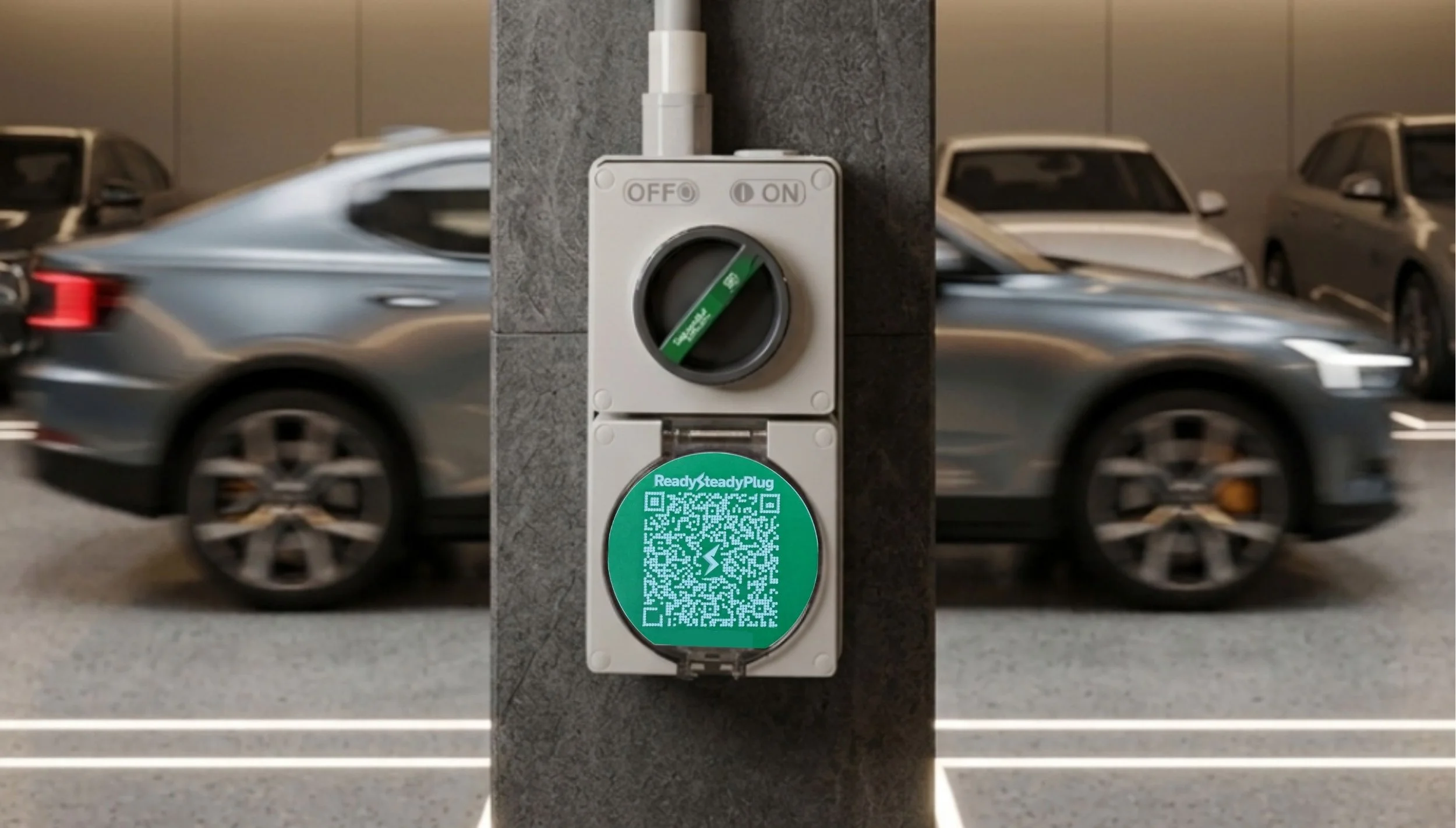
Why is Level 1 charging the right answer for most apartment buildings?
There is a widespread assumption that Level 2 charging (7kW or more, the type marketed as a "home EV charger") is the standard for residential EV charging, and that Level 1 (a 15A power point delivering 3.6kW) is a compromise. In a strata context, that assumption is wrong.
The maths is straightforward. According to the Australian Bureau of Statistics, the average Australian passenger vehicle travels 12,100 kilometres per year, or roughly 33 kilometres per day. The Electric Vehicle Council reports that most modern EVs consume 15 to 18 kWh per 100km, so the average daily commute uses 5 to 6 kWh of battery.
A standard 15A outlet running at 3.6kW delivers approximately 29 kWh over 8 hours overnight. That is nearly five times the energy the average resident uses in a typical day's driving. Even an EV owner who arrives home with the battery at 20% will wake up to a near-full charge.
For residents who regularly cover 250 kilometres or more daily, Level 2 may offer a real advantage. But that is a small minority. For the overwhelming majority of strata residents, Level 1 overnight charging is not a compromise. It is a complete solution.
Level 1 charging in strata offers decisive advantages over Level 2:
- No proprietary lock-in. Standard 15A GPO outlets are universal. Residents can use any compatible EV charge point. The infrastructure is not tied to any single brand or platform.
- Simpler electrical requirements. Running 15A circuits to car spaces requires far less cable capacity than 7kW Level 2 circuits. More charging spaces can coexist within the building's available electrical capacity.
- Easier OC approval. A Level 1 proposal is significantly less capital-intensive than a Level 2 rollout. Committees and non-EV owners are far more likely to vote in favour.
- Genuine future-proofing. Because the system uses standard outlets and off-the-shelf charge points, it is not dependent on any one supplier. The building's EV infrastructure will outlast any specific technology platform.
Who actually pays for EV charging in strata? A clear cost breakdown
The most common reason strata EV charging motions fail is ambiguity around costs. Committees worry about open-ended financial exposure. Non-EV owners worry about cross-subsidising their neighbours. Getting the cost structure right and communicating it clearly is often the difference between a motion that passes and one that does not.
A well-structured strata EV system separates costs into three clear categories:
| Who pays | What it covers | When |
|---|---|---|
| Owners corporation | Shared infrastructure: EV Distribution Boards (EVDBs), connection to the main switchboard, energy metering for load management | One-off contribution to a shared building asset |
| Individual EV owner | Last-mile connection from the EVDB to the GPO in their parking bay | One-off, paid at point of connection |
| Individual EV owner | Electricity consumed (metered individually, billed via app) | Ongoing, paid per kWh used |
Non-EV owners contribute only to the shared infrastructure. After that, every dollar flows from EV owners to their own usage. The OC funds the shared road into the car park. Individual drivers fund their own driveway.
As demand grows, each new EV owner pays their own connection fee to join the existing shared infrastructure. There is no further OC expenditure for each new connection. The committee does not need to vote again. The building manager is not involved. The new resident simply pays their connection fee and registers on the RSP app.
Go deeper: our guide for owners corporations breaks down the full cost model and the Charging as a Service option.
How does Dynamic Load Management protect a strata building's electrical system?
"Will this overload our building's electrics?" is the most common question strata committees ask, and it is a completely legitimate concern. The honest answer: it could, if EV charging is installed without proper electrical management. With Dynamic Load Management (DLM), it will not.
DLM is software that monitors a building's total electrical load in real time and adjusts the charging speed of each EV accordingly. When the building is using a lot of electricity for other things, the DLM system dials back the charging rate. When demand drops, it allows charging to speed up again. The International Energy Agency has highlighted load management as a key tool for scaling EV charging without expensive grid upgrades.
The RSP system installs energy meters at the building's main switchboard, on common mains, and on any relevant submains. These meters report usage to the RSP management platform in real time. When the building's load approaches its safe capacity limit, the system automatically reduces charging rates, throttling them down proportionally across all active charging sessions.
This process is entirely automatic. Practically, this means:
- No risk of tripping the building's mains protection
- No manual management required from the building manager or committee
- No electrical upgrades needed to start the rollout in most buildings
- The system can accommodate significantly more EVs than a simple calculation of rated charger wattages would suggest, because residents do not all charge simultaneously at maximum rate
- The committee has a monitoring dashboard showing total EV load at any time
What does committee approval require under NSW strata law?
In NSW, EV charging infrastructure is classified as a sustainability infrastructure upgrade under section 132B of the Strata Schemes Management Act 2015. This classification, introduced by the Strata Schemes Management Amendment (Sustainability) Act 2021, lowers the voting threshold at a general meeting: a sustainability infrastructure resolution passes unless 50% or more of the value of votes cast are against it, rather than the 75% special resolution previously required.
Two further changes matter for committees. From 1 July 2025, an owners corporation can no longer block sustainability infrastructure such as EV charging on aesthetic grounds alone, unless the building is under heritage rules. And if an owners corporation unreasonably refuses a reasonable installation request, the lot owner can apply to the NSW Civil and Administrative Tribunal (NCAT) for orders.
The Strata Schemes Legislation Amendment (Miscellaneous) Bill 2025 (often called the "Right to Charge" bill) was introduced in NSW Parliament in November 2025 and has passed the Legislative Assembly. It is currently before the Legislative Council. If passed, it will give owners a legal right to install EV charging in their lot and introduce a deemed-approval rule where a committee that does not respond within three months is taken to have approved the request.
A well-prepared committee proposal addresses the four questions that most often derail approval:
- How much will this cost the OC, and is it a one-off or ongoing?
- Will it put up levies for owners who do not have EVs?
- Could it damage our building's electrical system?
- What happens when more residents want to join in future?
A proposal that answers all four directly is far more likely to pass. RSP provides a complete committee proposal package as part of the free site assessment process, including draft motion language and a presentation that can be shared with committee members before the vote.
Go deeper: How to get EV charging approved in your strata building walks through the motion step by step, the NSW Right to Charge law explained covers the legal detail, and our guide for strata managers explains how to handle resident requests.
How do strata EV charging rules differ across Australian states?
Strata and body corporate law is set at the state level, so the approval pathway depends on where the building is. The table below summarises the position in the three largest states as of 2026. This is general information, not legal advice; confirm the current position with a strata lawyer before relying on it.
| State | How EV charging is treated | Voting threshold |
|---|---|---|
| NSW | Classified as sustainability infrastructure under section 132B. Cannot be blocked on aesthetic grounds since 1 July 2025 (heritage excepted). Right to Charge bill before Parliament. | Simple majority — passes unless 50% or more of votes cast are against it |
| Victoria | No standalone right-to-charge law. Relies on the National Construction Code 2022: all new apartment buildings must be EV Ready since 1 May 2024. 2025 state guidelines streamlined the exclusive-use by-law process for individual lot installations. | Varies — individual lot installs often handled via exclusive-use by-law; common property works may need a special resolution |
| Queensland | Operates under body corporate legislation. Ordinary resolutions apply to minor works, special resolutions to major works. The Zero Emission Vehicle Strategy targets 50% ZEV sales by 2030, driving updated committee guidance. | Ordinary resolution for minor works; special resolution for major works on common property |
For new buildings nationally, the National Construction Code 2022, administered by the Australian Building Codes Board, requires the common areas of new apartment buildings to be EV Ready, including a dedicated electrical distribution board for EV charging, typically one board per 24 parking spaces. This is why the conversation for older buildings is fundamentally a retrofit conversation: the building was never wired with EV charging in mind, so the approach has to work within existing infrastructure.
Are EV chargers a fire risk in strata buildings?
This question comes up at almost every committee meeting, often raised with genuine concern. It deserves a direct, evidence-based answer.
The Electric Vehicle Council's 2025 strata guidance states plainly that the fire-safety concerns sometimes raised about EVs and their charging infrastructure are not evidence-based. The Australian Building Codes Board reached the same conclusion: global evidence indicates EVs are much less likely to be involved in a fire than petrol and diesel vehicles. This is attributed to sophisticated battery management systems, rigorous manufacturing safety standards, and the absence of large volumes of flammable liquids.
The insurance angle matters too. Off the back of misinformation about EV fire risk, some insurers initially sought to apply extra fees or conditions to strata car parks with EV chargers. The EVC notes that several of its member organisations have installed EV charging infrastructure with no change to the risk profile or premiums of the property. If a building's insurer proposes onerous conditions, the EVC's advice is to contact a broker or consider an alternative provider. A managed system with individual metering, proper electrical protection, and load management is materially lower-risk than residents running extension leads to unmanaged power points, which is the genuine hazard a building should be worried about.
Go deeper: Are EV chargers fire safe? What strata buildings need to know covers the Australian data in full and explains the real lithium-ion risk that committees often miss.
A worked example: what overnight Level 1 charging actually delivers
It helps to put real numbers to the Level 1 argument, because the conclusion surprises people.
Take an average strata resident. They drive the Australian average of around 33 kilometres a day. Their EV consumes roughly 16 kWh per 100km, so a typical day uses about 5.3 kWh of battery.
They plug into a standard 15A socket when they get home at 6pm and unplug at 7am. That is 13 hours, but allow for the charger not running at full rate the entire time and call it a conservative 8 effective hours at 3.6kW. That delivers around 29 kWh overnight.
So the resident uses about 5.3 kWh in a day and replaces about 29 kWh overnight. They are putting back more than five times what they used. Even a resident who arrives home with a nearly flat battery has it full again by morning. The only residents for whom this maths does not work are those driving roughly 180 kilometres or more every single day, which is a small minority of apartment residents.
This is the core reason Level 1 is not a compromise in strata. The constraint that matters is not how fast the car charges, but whether it is full by morning. For the overwhelming majority of residents, an overnight Level 1 charge clears that bar with room to spare.
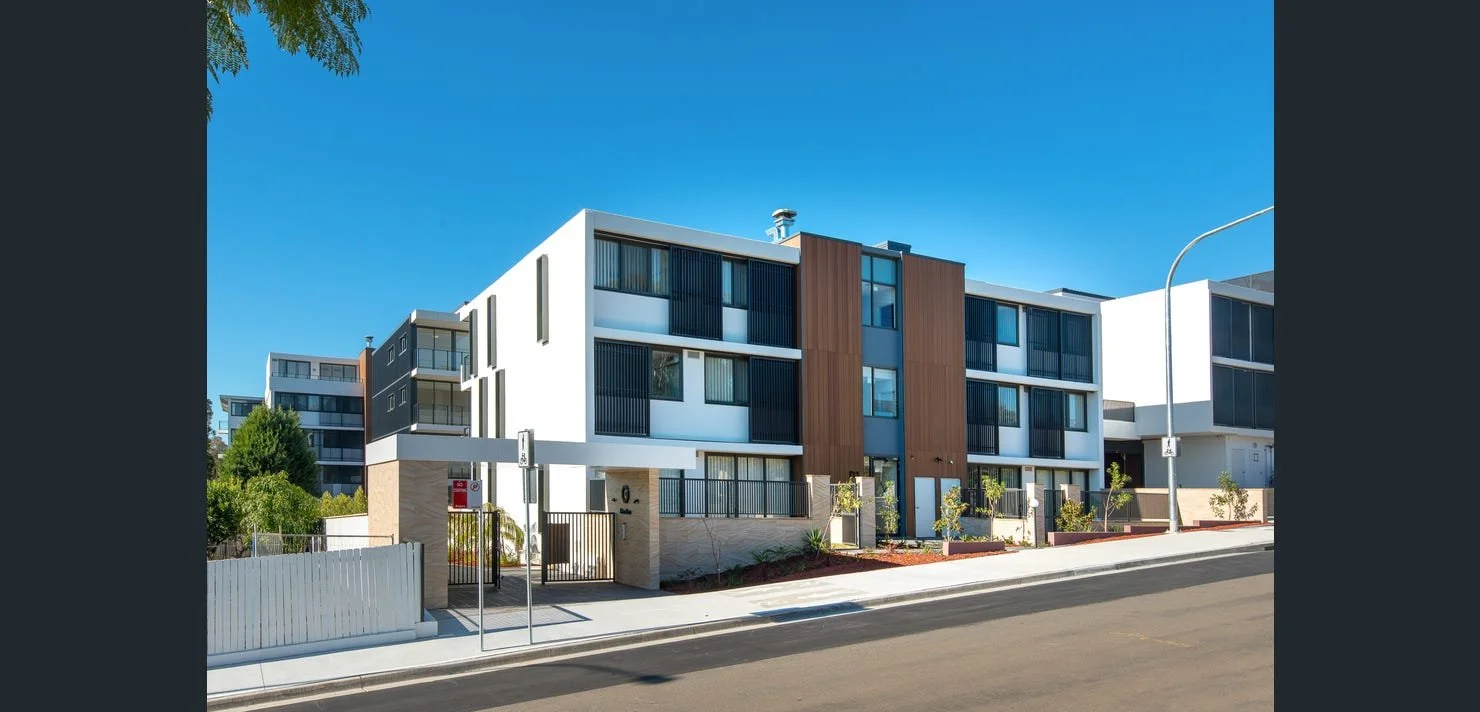
North Ryde (160 lots): Three 12-pole EVDBs installed across the car park, providing coverage for 36 initial spaces with infrastructure designed for full 160-lot coverage. Full communications redundancy, operating without requirement for Wi-Fi network in car park area. Mains, common mains, and two submains all metered separately.
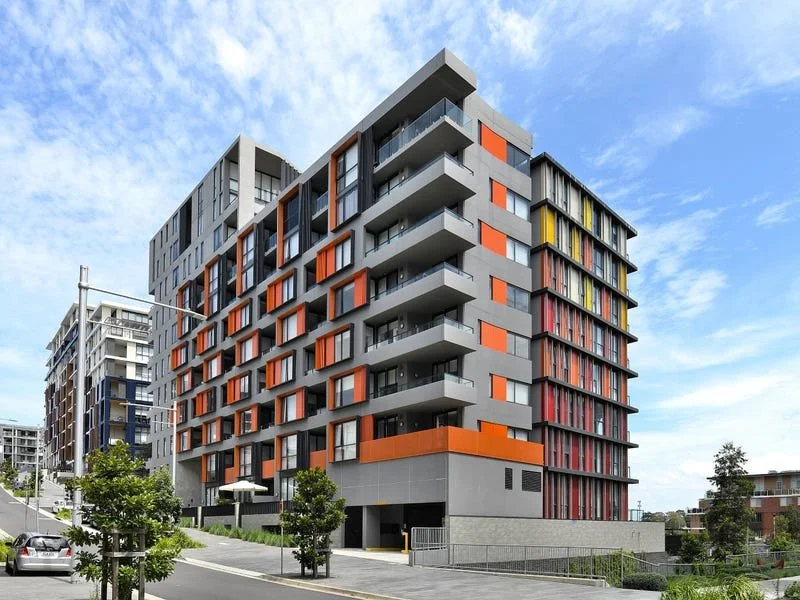
Meadowbank (154 lots, 213 car spaces): Three underground parking levels with no Wi-Fi or cellular coverage in the basement. RSP deployed its Smart Level 1 EV charging solution across all levels for 13 initial spaces, with a pathway designed to reach 100% coverage. No car-park-wide data network required. Mains, common mains, and one submain all metered separately
What does a real Australian strata EV charging installation look like?
The best way to understand how strata EV charging works in practice is to look at buildings that have done it. RSP has installed systems across NSW, from small boutique buildings to large-scale complexes. Two case studies stand out.
Meadowbank, NSW (154 lots, 213 car spaces). Three underground parking levels with no Wi-Fi or cellular coverage in the basement. RSP deployed its managed Level 1 EV charging solution across all three levels for 13 initial spaces, with infrastructure designed to reach 100% coverage. No car-park-wide data network required. Mains, common mains, and one submain all metered separately. Read the Meadowbank case study.
North Ryde, NSW (160 lots). Three 12-pole EVDBs installed across the car park, providing coverage for 36 initial spaces with infrastructure designed for full 160-lot coverage. Full communications redundancy, operating without requiring a Wi-Fi network in the car park area. Mains, common mains, and two submains all metered separately. Read the North Ryde case study.
These are not theoretical designs. They are operating systems in NSW strata buildings, supporting real residents charging real EVs every night, with no Wi-Fi requirement in the car park and full individual metering and billing.
How should a strata building design for future EV demand?
A common mistake in strata EV rollouts is designing just for current demand. A building installs charging for five residents, and when fifteen more want to join, the infrastructure needs to be redesigned and the OC faces another capital expenditure.
The right approach is to design for full coverage from the start, while only activating the spaces where there is immediate demand. The shared EVDB panels are sized and positioned to serve all car spaces in the building. Cabling routes are planned for every space, even if cables are not yet run to spaces without immediate demand. When a new resident wants to join, they pay their connection fee to have their space connected to the existing EVDB. No committee vote, no new OC expenditure, no major electrical work.
For a building with 100 car spaces, this means the OC invests once in shared infrastructure designed for 100 spaces, and activates them as demand grows.
Frequently asked questions about strata EV charging
Can a resident install their own charge point without owners corporation approval?
No. If the installation involves common property (which it almost always does in a strata car park), OC approval is required. Installing electrical infrastructure in common property without approval is a breach of strata by-laws and potentially a safety risk.
What if our building's electrical mains are old?
This is assessed as part of a free site assessment. In most buildings, Dynamic Load Management manages charging load within existing capacity without requiring a mains upgrade. If a mains upgrade is eventually needed, the monitoring system identifies when that threshold is approaching, giving the OC time to plan.
How fast does a 15A Level 1 charger add range to an EV?
A 15A Level 1 socket running at 3.6kW adds approximately 20 kilometres of range per hour. Over an 8-hour overnight charge, that is around 160 kilometres of range, more than four days of average Australian driving.
How is electricity billed for EV charging in strata?
In a well-designed system, each charge point has its own meter accurate to within 1%. When a resident charges their car, the electricity used is recorded against their account and billed automatically through an app. The building's overall electricity bill does not increase in a way that gets shared across all owners.
What happens when a lot is sold?
The infrastructure remains in place and the new owner can use it. If a connection has not been installed yet, the new owner can connect to the existing system by paying their own connection fee. No committee vote or new OC expenditure required.
Does Dynamic Load Management work without Wi-Fi in the car park?
Yes, with a properly designed system. RSP's system places the management intelligence in a central unit outside the basement, where connectivity is reliable. The charge points communicate with that central unit over a wired connection, so they do not need Wi-Fi or cellular signal themselves. The Meadowbank installation operates with no car-park Wi-Fi at all.
What is Charging as a Service (CaaS) for strata?
CaaS is a model where the EV charging infrastructure is provided and managed by a third party, rather than purchased outright by the owners corporation. The OC pays a service fee rather than a large upfront capital cost. RSP offers a CaaS structure that allows owners corporations to start with very little or no upfront capital expense.
Are EV chargers a fire risk in apartment buildings?
The evidence does not support this concern. The Electric Vehicle Council's 2025 strata guidance states the fire-safety fears around EVs are not evidence-based, and real-world data shows EVs catch fire less often than petrol and diesel vehicles. A properly managed charging system with individual metering and electrical protection is far safer than residents running extension leads to unmanaged power points.
Do EV charging strata laws differ between states?
Yes. In NSW, EV charging is classified as sustainability infrastructure and passes on a simple majority. Victoria has no standalone right-to-charge law but requires new apartments to be EV Ready under the National Construction Code 2022. Queensland uses body corporate legislation, with ordinary resolutions for minor works and special resolutions for major works on common property.
Thinking about EV charging for your building?
Start with a conversation. We will ask a few questions about your building and let you know what is involved. No commitment required, and no obligation to proceed.
Prefer to talk first? Contact us with any questions.
