
Dynamic Load Management
EV Charging that respects your building’s power limits, in real time.
Apartment buildings have a finite electrical capacity. Dynamic Load Management (DLM) is the controller that lets you add EV charging without re-engineering the supply — measuring building demand at key points in the electrical network and adjusting charging continuously to stay safely within them.
EV charging that needs no new supply infrastructure.
Every building has a fixed amount of power to draw on. Lifts, lights, pumps, hot water, air conditioning, and cooktops are already using most of it, and that demand rises and falls at predictable times of day.
Dynamic Load Management (DLM) measures the building's total power use in real time and fits EV charging into whatever capacity is actually free.
Round Robin Algorithm
When the building gets busy, charging for one or more drivers may have to be paused temporarily. When demand drops, charging ramps back up. The building's supply limit is never exceeded as shown in the right-hand animation.
If a charging session has been paused, the system will share the available capacity between all plugged in vehicles reshuffling the power every 30 minutes so each car gets a fair share. We have a calculator here to show how capacity to support EV charging is available even if there is some sharing required.
That is why most buildings can add ReadySteadyPlug with no switchboard or supply upgrade.
Understanding load management
-
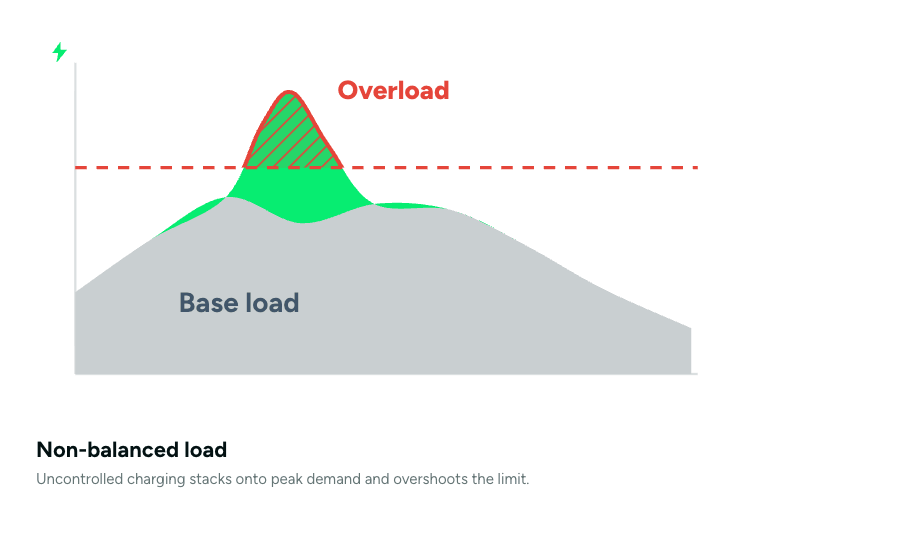
Non-balanced load
Uncontrolled charging stacks onto peak demand and overshoots the building limit.
-
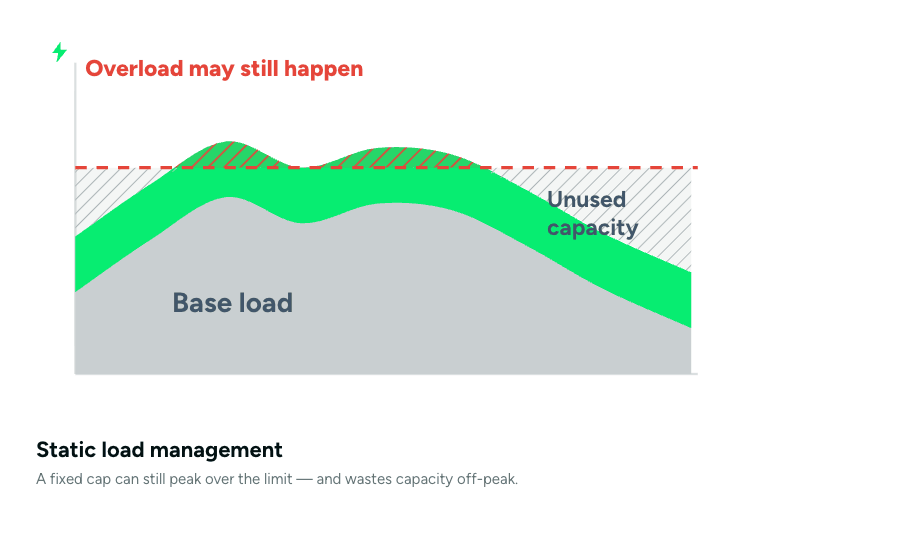
Static load management
A fixed cap can still peak over the limit if loads change over time – and wastes capacity off-peak.
-
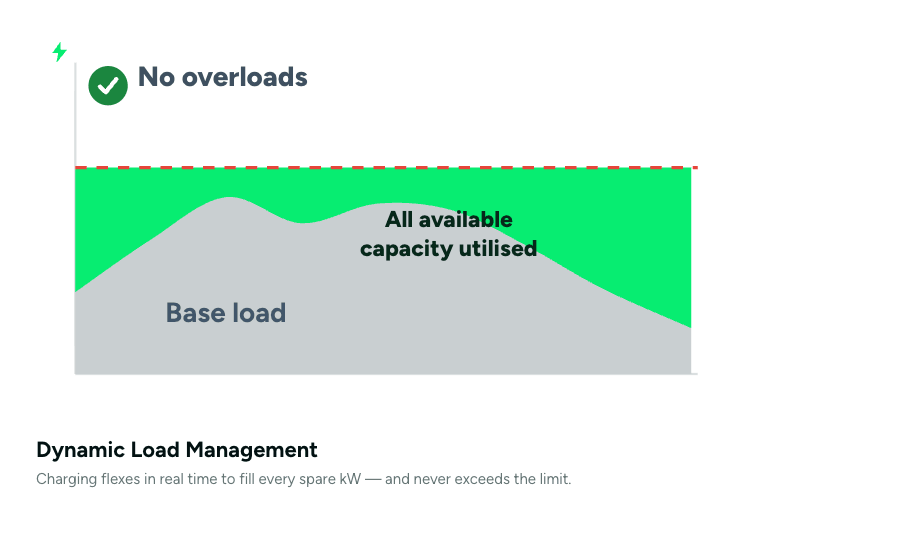
Dynamic Load Management
Charging adjusts in real time to use those spare kW – and never exceeds the limit.
What changes when the controller is awake.

Technical specs
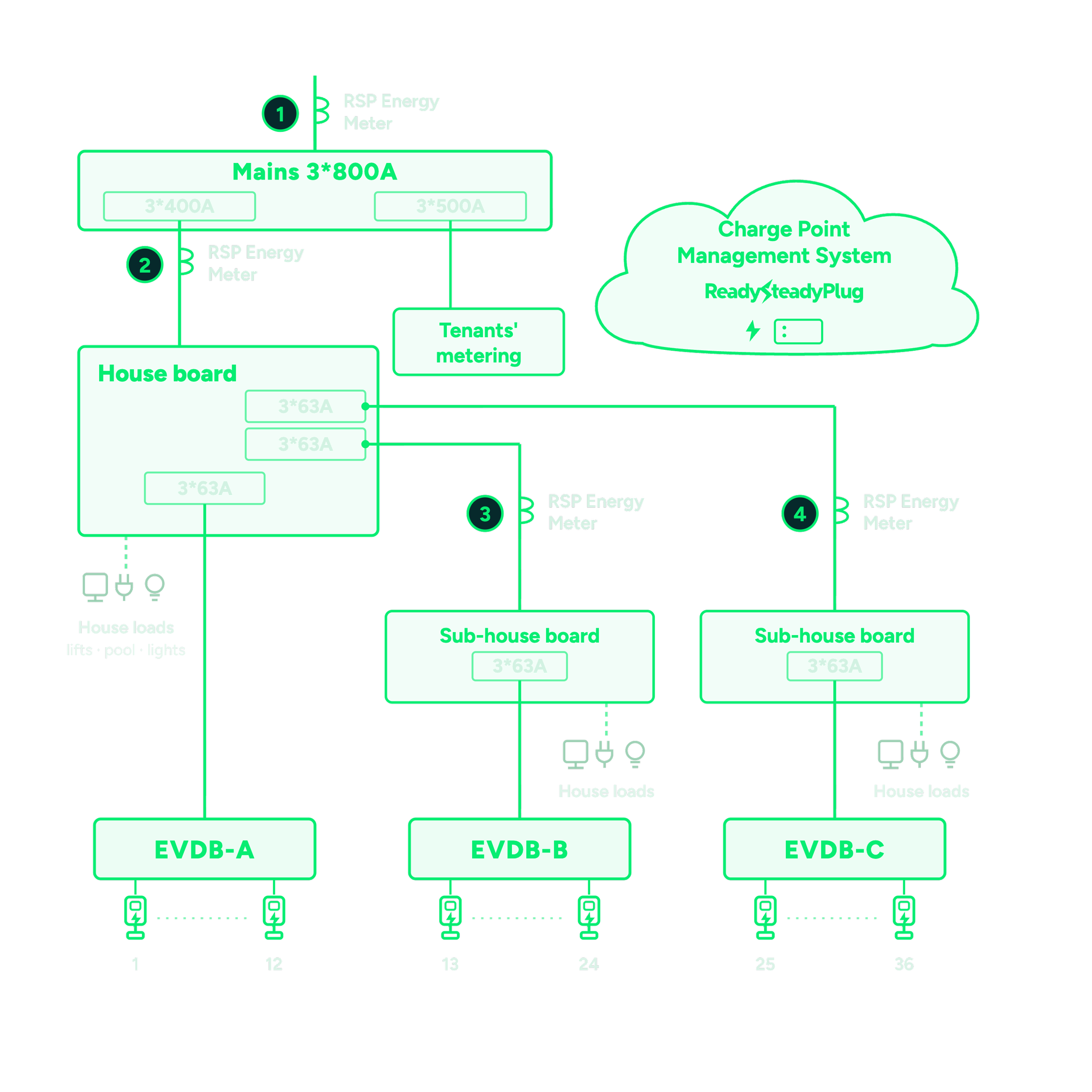
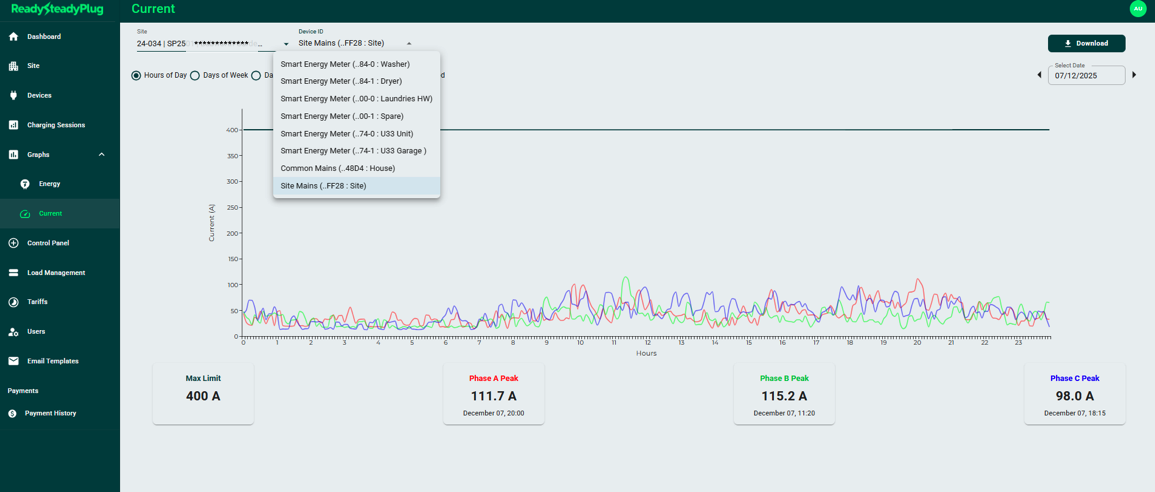
In this real-world example, the RSP Energy Metering and Dynamic Load Management (DLM) solution is implemented at four (4) connection points. Mains board (1) is metered, as well as House board (2) and Sub-house boards (3 & 4) as they all provide supply to non-EV loads also. The load of every EVDB is managed by the CPMS for DLM, with each charge point individually metered within the EVDB.-
Real-time metering
High-accuracy energy measurement (Class 1 metering)
Continuous logging to the RSP platform
-
Configurable safety headroom — never targets the absolute ceiling
Time-of-use scheduling available
Graceful ramp-up after capacity returns
-
Per-outlet RCD trips do not affect neighbouring outlets
Centralised data uplink at the EVDB
-
Site profile set at commissioning by RSP engineers
Manager dashboard for capacity and session reporting
OC-defined tariff schedules supported (single, ToU, multi-tariff)
Remote firmware updates
The same controller, three very different wins.
FOR OWNERS CORPORATIONS
No expensive upgrades
DLM is the reason a switchboard or supply upgrade is avoidable in most buildings. Charging works within the capacity you already have — so the single largest line item is gone before the AGM discussion even starts.
FOR BUILDING & SITE MANAGERS
Full visibility on load over time
The platform shows peak load and load patterns across the whole site. That same data opens the door to actively managing maximum-demand charges and inform other electrification initiatives.
FOR INSTALLERS
Easy to deploy
Metering is deployed at key points in the electrical system as the site requires, with per-EVDB limits and live per-phase visibility. Capacity is constantly being measured — not assumed.
Frequently Asked Questions
-
No. DLM continuously monitors the building’s total load and adjusts charging in real time so the supply limit is never exceeded. If building demand rises, EV charging reduces automatically.
-
Charging may pause briefly during the building’s peak periods, then resume automatically. Because most charging happens overnight when building demand is lowest, residents typically notice nothing.
-
In most buildings, no. DLM works within existing capacity, and continues to measure the building’s actual headroom.
-
Absolutely! The metering and DLM solution can be installed first to measure the building’s real load profile before any EV decision is made. Please get in contact.
-
The controller polls every metering point continuously and re-allocates charging across active sessions.
-
The EVDB keeps running locally however new sessions will not be able to commence until connectivity resumes. All charge sessions and billing data are recovered automatically.
Real events. Real responses.
Building waking up
Common load oeprating well below the safe ceiling. All 9 active EV chargers running.
Morning peak
House power load rises. The controller monitors the increasing load.
EV charging eases
Load approaches the safety limit. EV charging is eased, some sessions are paused. System continues to monitor.
Morning peak clears
EV charging ramps back up.
Dinner peak protected
Combined common + house demand increases for the dinner rush. EV sessions throttle — keeping building total under safety ceiling.
Off-peak window opens
Scheduled charging to take advantage of off-peak rates commences. Most residents complete their day's charge between now and 06:00.
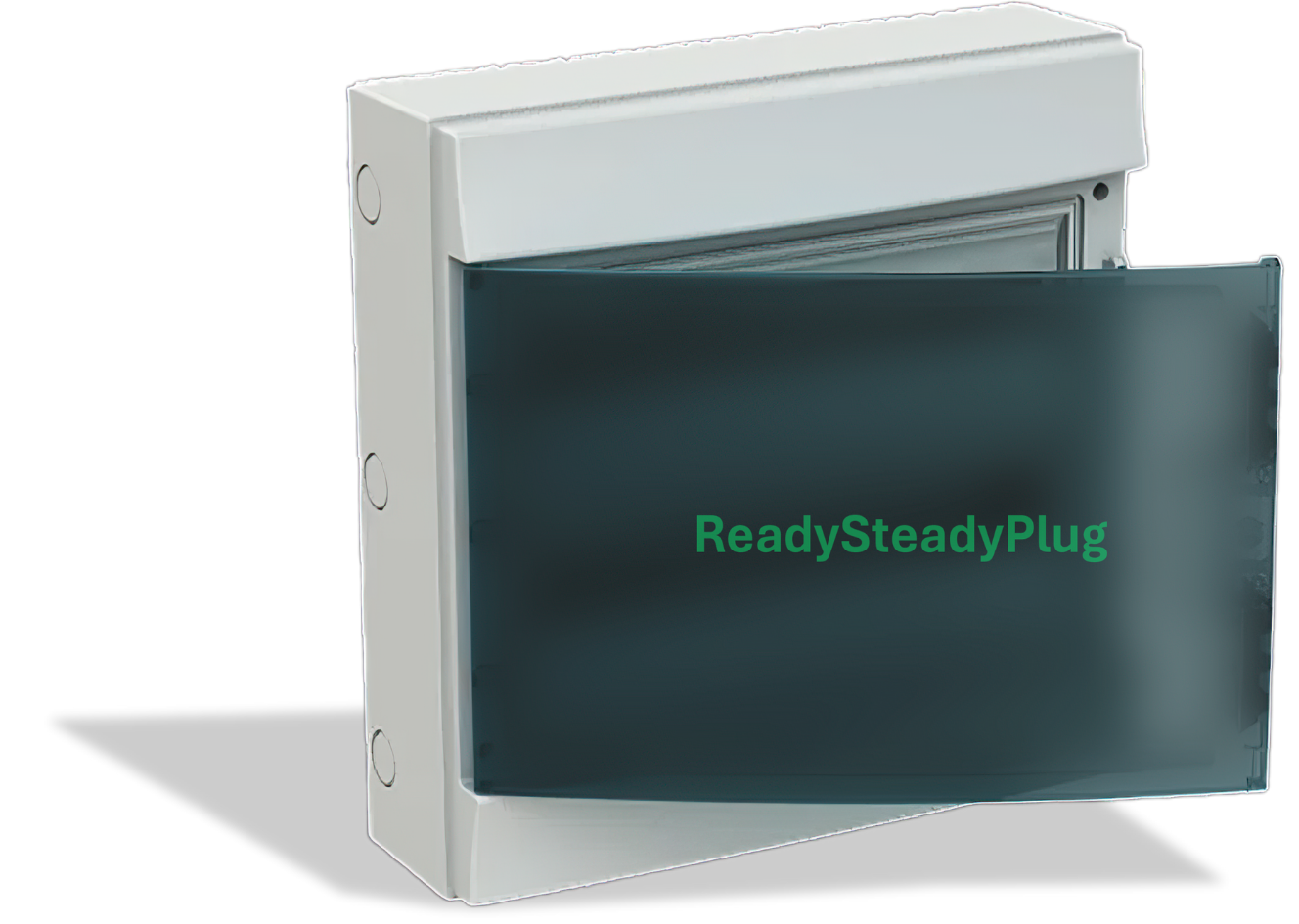
Want the load visibility without the chargers? Contact us today.
Energy metering and DLM are core parts of the ReadySteadyPlug charging system — and they're also offered on their own, for buildings that want metering and load visibility without (or before) EV charging.
Deployed in real buildings
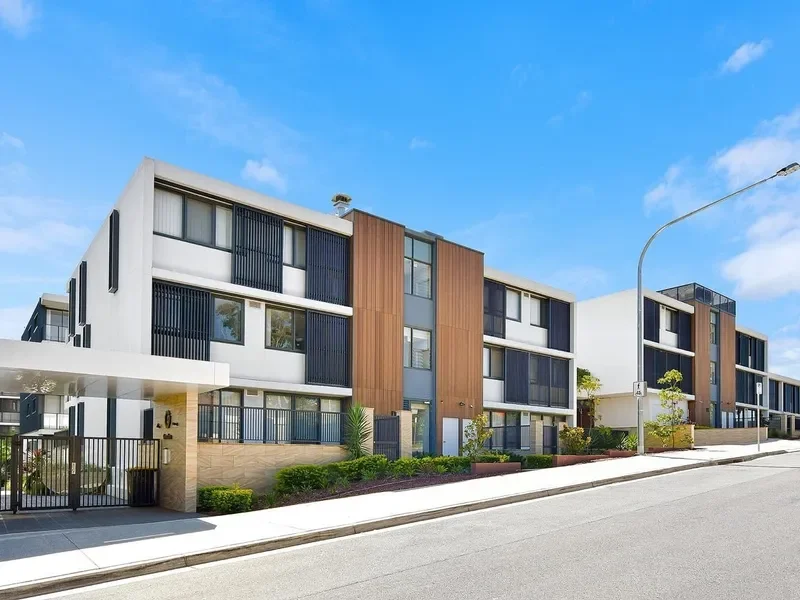
160 lots · North Ryde, NSW
At this 160-lot building, RSP Energy Metering monitors the mains, common mains, and two sub-mains separately — with every charge point individually metered, ready to balance load as demand grows.
Book a site assessment
We assess your building’s electrical capacity, parking layout, and rollout options.